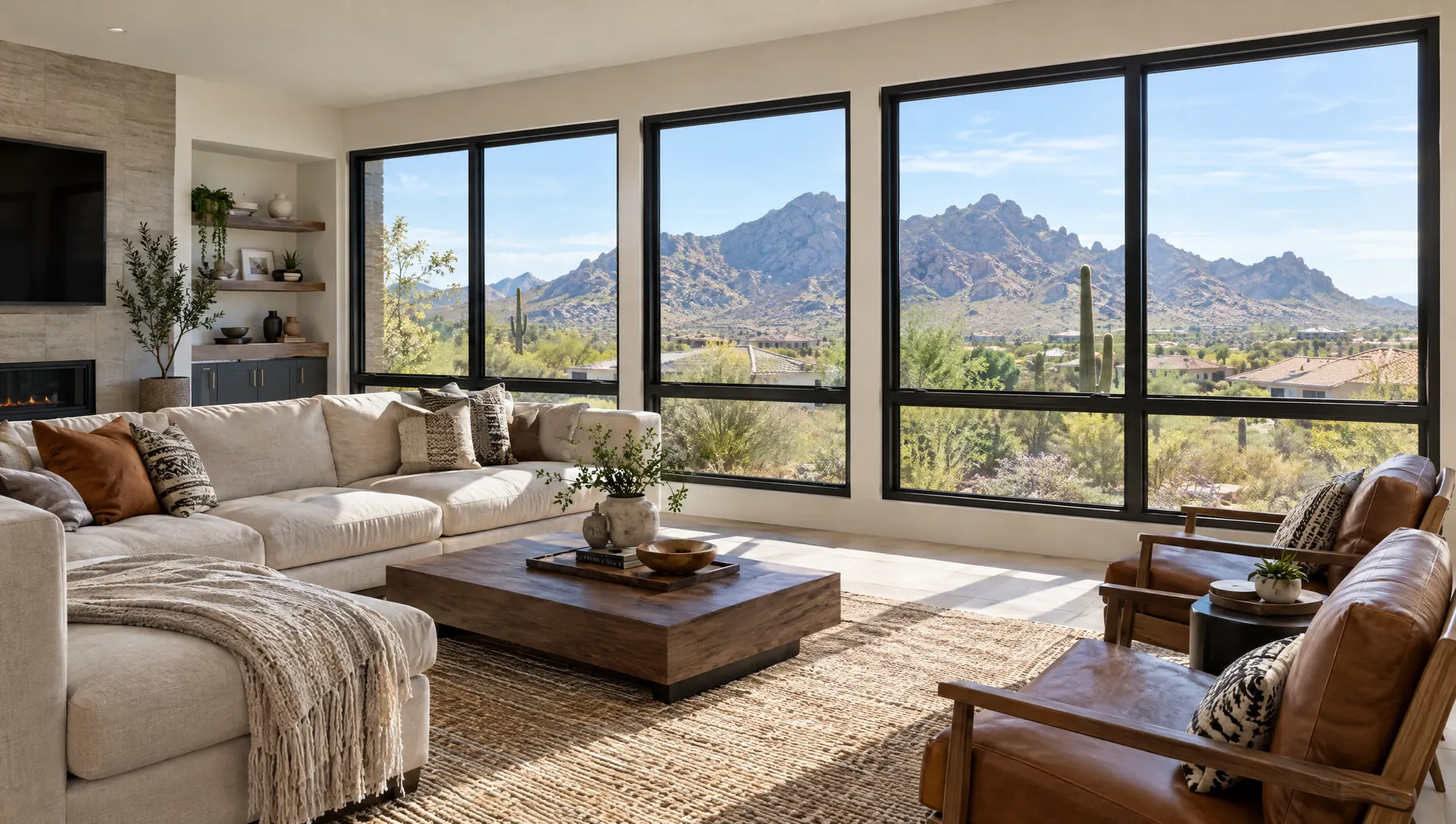
Phoenix Energy-Efficient Windows
Energy-Efficient Windows in Phoenix, AZ
Dual-pane Low-E glass that blocks the sun's heat, installed and sealed so your home stays cooler and quieter.
Phoenix Energy-Efficient Windows
Dual-pane Low-E glass that blocks the sun's heat, installed and sealed so your home stays cooler and quieter.
Energy-efficient windows in Phoenix are less about winter drafts and more about summer sun. Heat pours in through old glass, especially on west- and south-facing walls, and your AC works harder to keep up.
The fix is glass built for a hot climate: two panes with an insulating gap and a Low-E coating that reflects heat while letting light through. The rating to watch is the solar heat gain coefficient, or SHGC. The lower it is, the less heat gets in.
This is the service people mean when they ask about window insulation. Instead of covering old windows, the windows themselves do the insulating. We'll show you the ratings for each option so you can compare them.
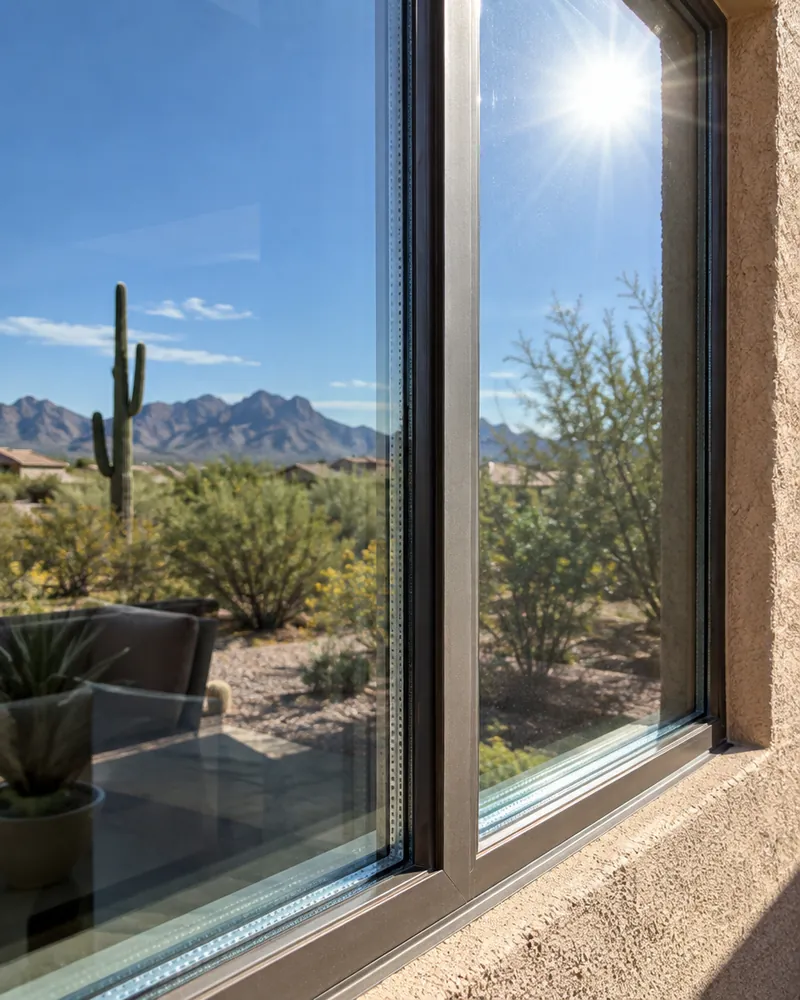
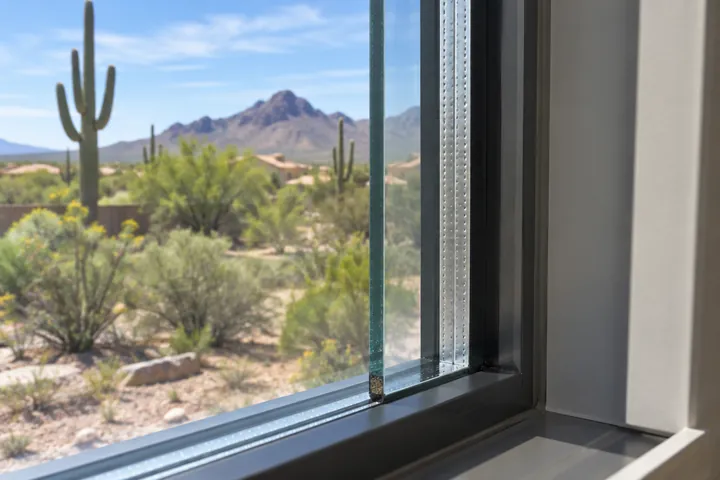
Two panes with a sealed space between them slow heat moving through the window.
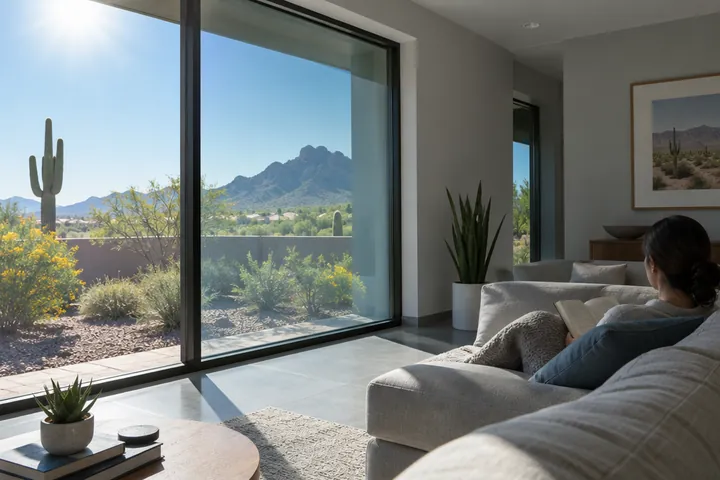
A thin, nearly invisible coating on the glass reflects heat while letting daylight in.
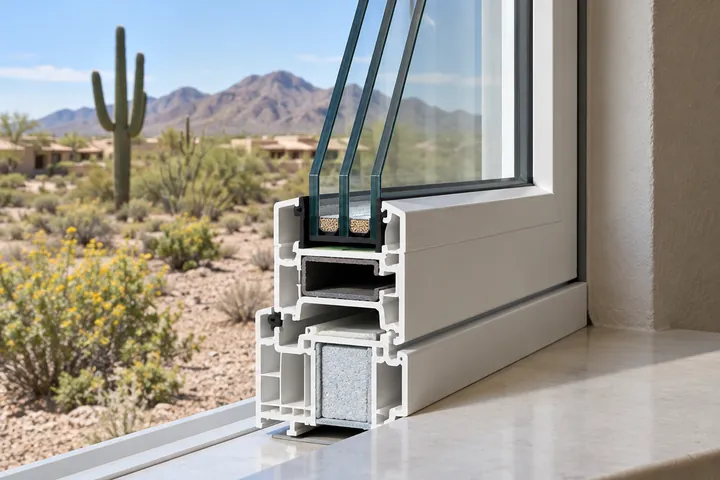
Vinyl and fiberglass frames, or aluminum with a thermal break, keep heat from moving through the frame.
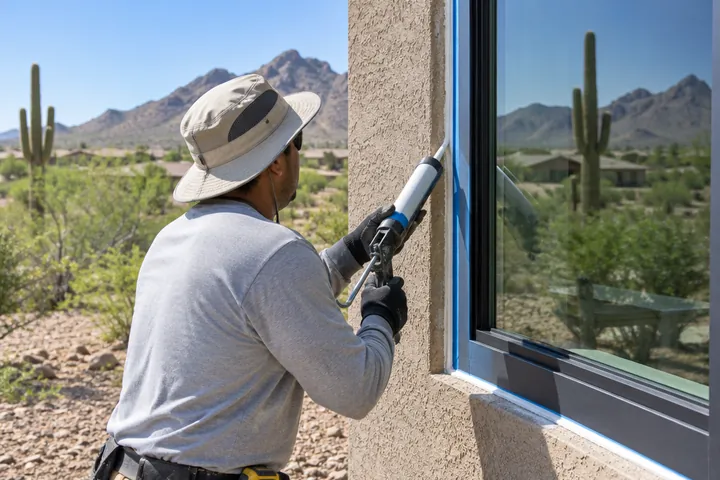
Even the best window leaks heat if it isn't sealed. Foam, sealant and weatherstripping finish the job.
| Rating | What it measures | What to look for in Phoenix |
|---|---|---|
| SHGC (solar heat gain coefficient) | How much of the sun's heat comes through | Lower is better; City of Phoenix guidance uses 0.25 or lower |
| U-factor | How fast heat moves through the window | Lower is better |
| Visible transmittance | How much daylight comes through | Higher means a brighter room |
| Air leakage | How much air gets through the window | Lower is better |
These ratings appear on the NFRC label on new windows. We'll show you the label numbers for each window in your estimate.
Afternoon sun hits these windows hardest. They're often the first ones homeowners replace.
More glass means more heat. Low-E glass makes big windows livable in summer.
Original aluminum windows conduct heat through both the glass and the frame.
Bedrooms and offices that stay hot often have a window problem.
Cost comes from the number and size of windows, the frame material and the glass package. Upgraded Low-E coatings and specialty glass add to the price of each unit.
We'll show you the rating differences between options so you can see what each upgrade buys. Your estimate lists every window with its frame, glass and ratings.
Tell us about the windows and what's bothering you about them. We'll set up a time to measure.
Free estimate, no obligation
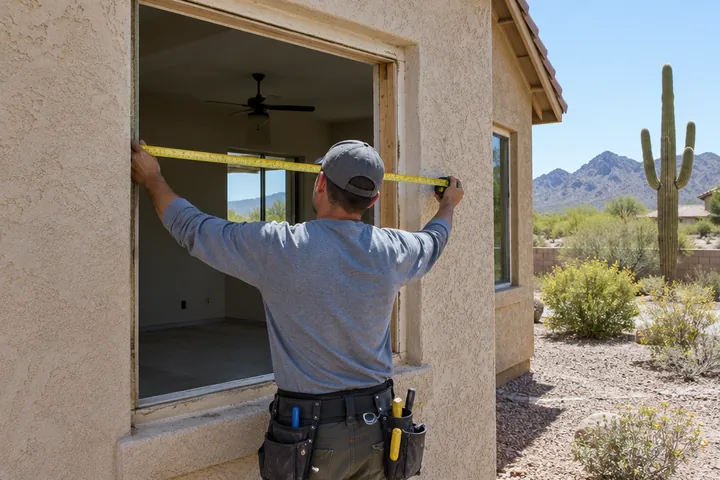
We look at which windows get the most sun and measure every opening.
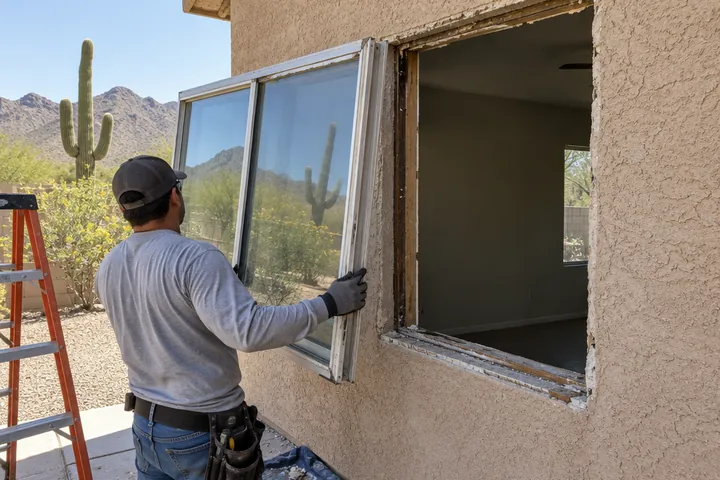
You pick frames and glass with the ratings in front of you.
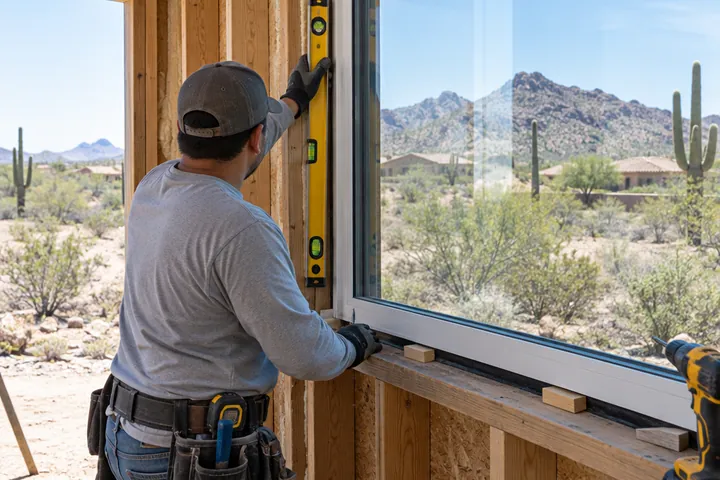
Windows are set, fastened and sealed so air and dust can't get around them.
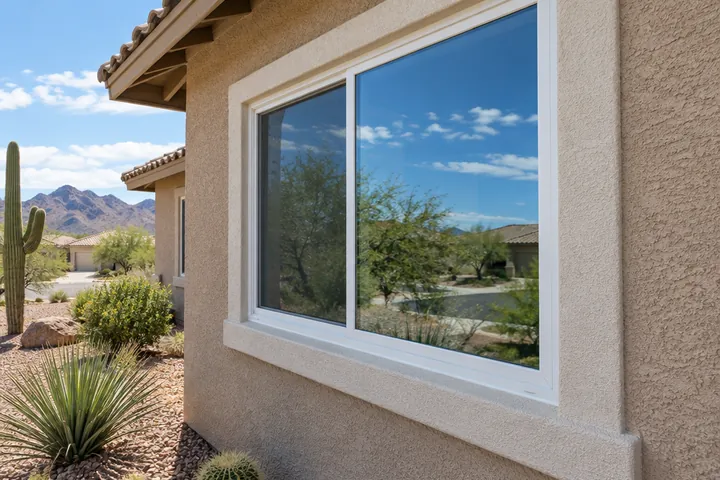
We check operation and seals and go over the ratings with you.
They're one of the most noticeable upgrades in a hot climate, because so much of a home's heat comes in through the glass, especially on sun-facing walls.
Low-E glass has a thin coating that reflects heat while letting visible light through. It's what keeps a sunny room from overheating.
Film can lower heat gain on existing glass, but it doesn't fix single-pane glass or leaky aluminum frames the way new windows do.
Solar heat gain coefficient: the share of the sun's heat that gets through the window. Lower numbers are better in Phoenix.