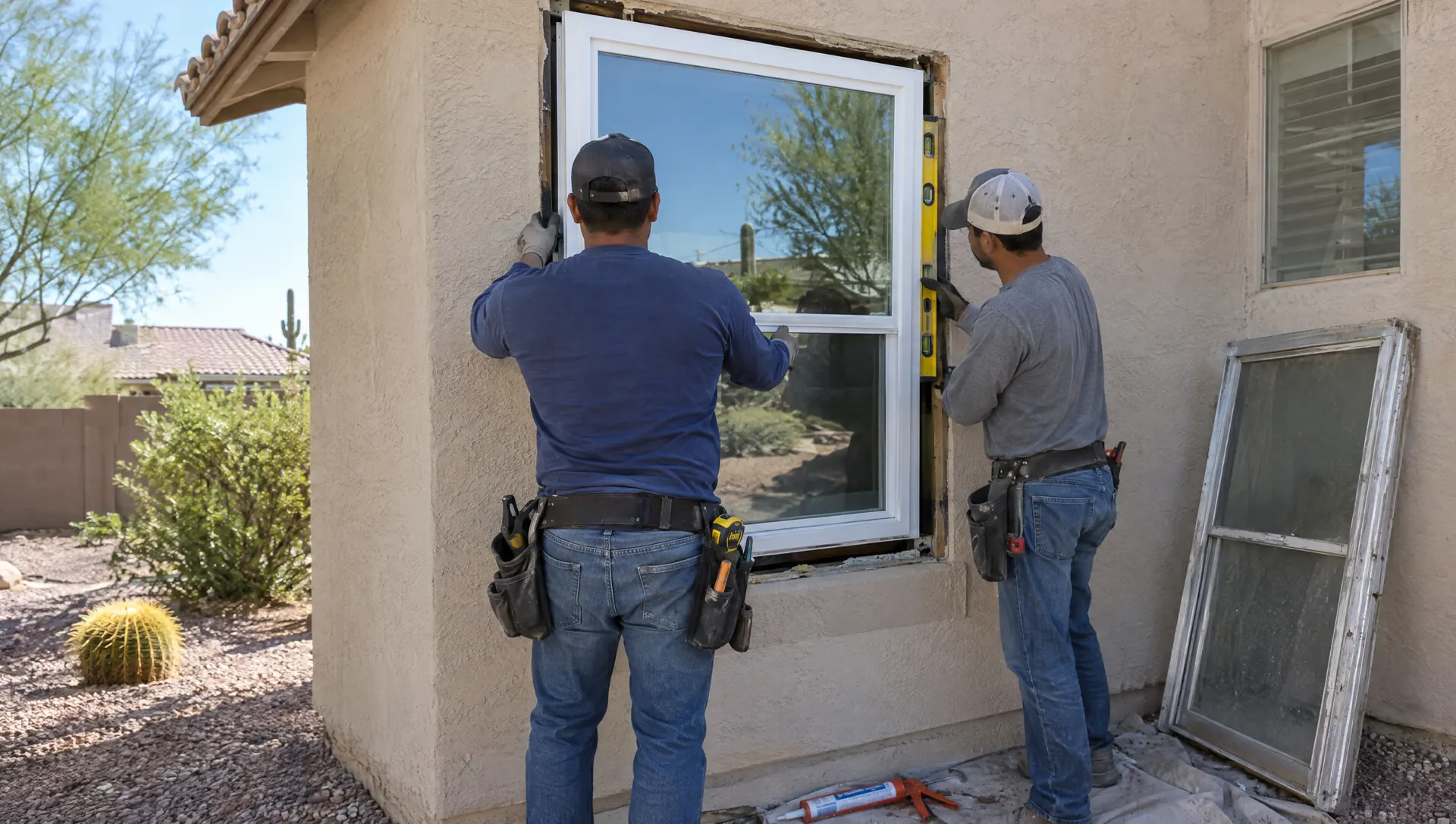
Phoenix Replacement Windows
Replacement Windows in Phoenix, AZ
Frames and glass chosen for desert heat, measured to your openings and installed so they seal tight against dust and monsoon rain.
Phoenix Replacement Windows
Frames and glass chosen for desert heat, measured to your openings and installed so they seal tight against dust and monsoon rain.
Replacement windows in Phoenix have one main job: keeping the sun's heat outside. Plenty of Valley homes still have original single-pane aluminum windows, and the frames conduct heat straight into the room. Swapping them for dual-pane units with a Low-E coating changes how the house feels on a July afternoon.
We help you choose the frame and glass that fit the house and your budget. Vinyl is the most common choice. Fiberglass handles heat and holds its shape well. Thermally broken aluminum gives you the slimmest sightlines for modern homes.
Each window is measured at your home and made to fit the opening. You get a written estimate that lists every window, its size, frame and glass, so you can compare it line by line.
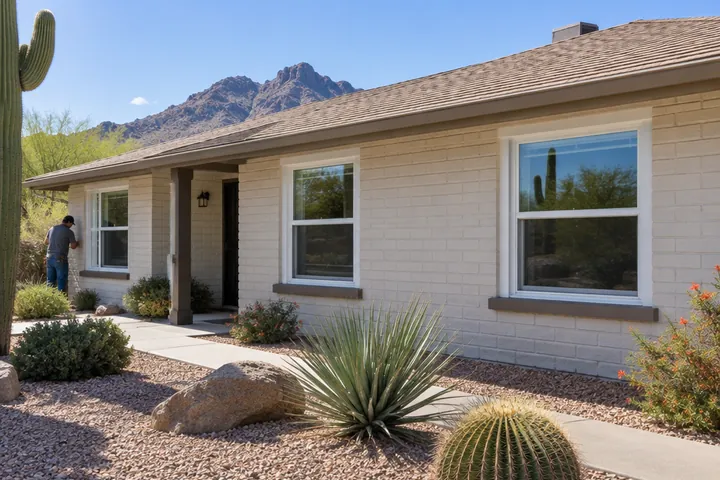
Classic sashes that slide up and down. A good match for ranch homes where you want to keep the original look.
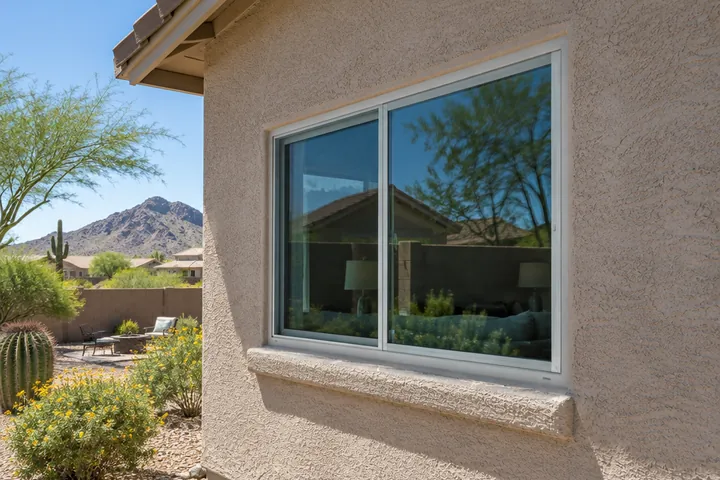
Horizontal sliding windows, common in Phoenix tract homes. Easy to operate and a direct swap for most old aluminum sliders.
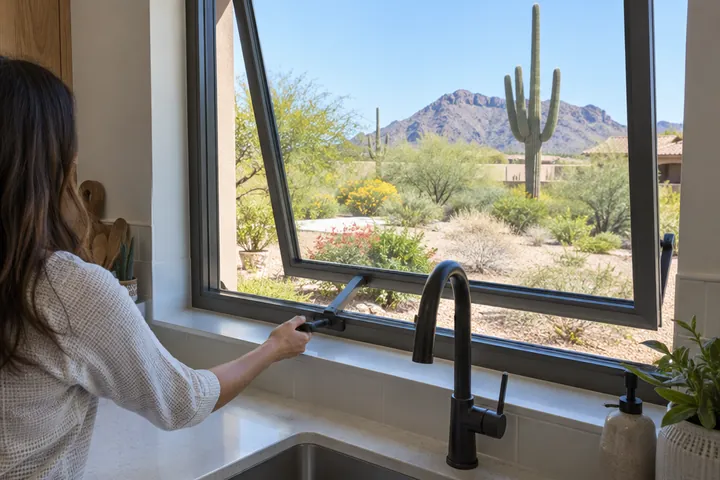
Hinged windows that crank open and seal tight when closed. Good for kitchens and hard-to-reach spots.
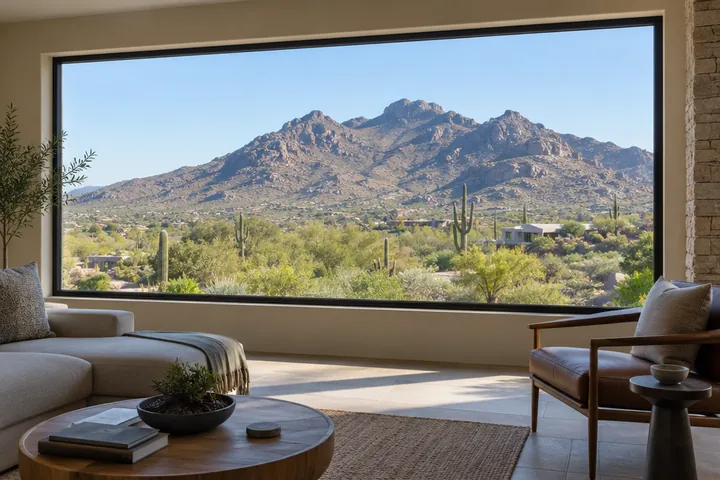
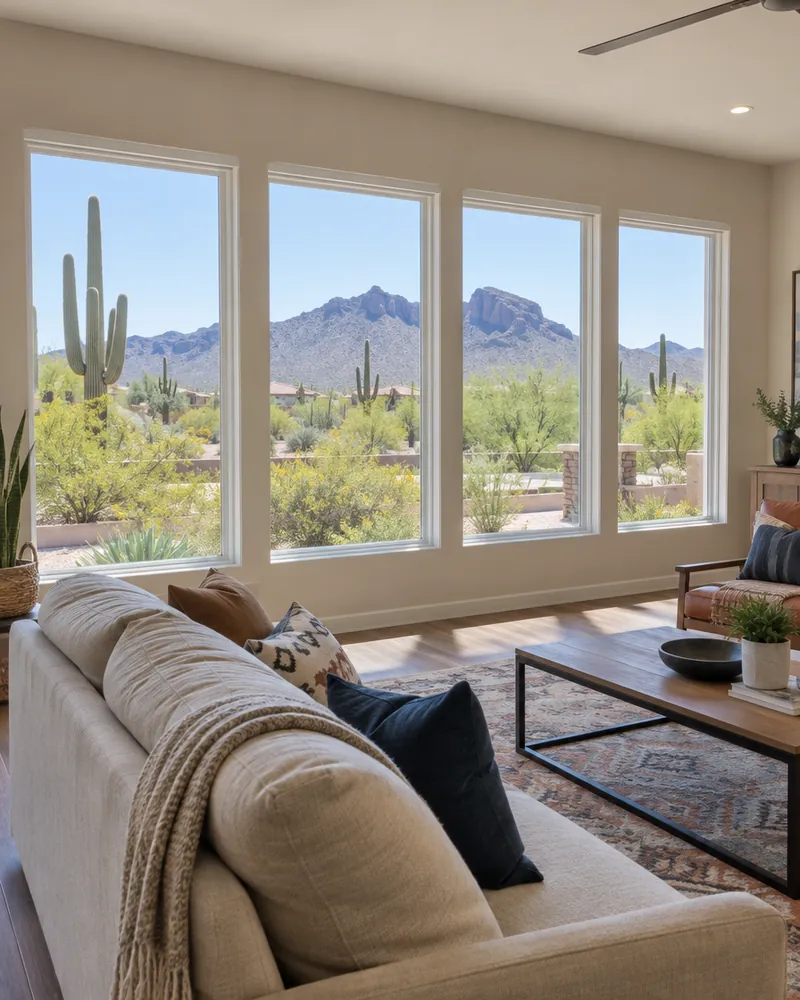
Fixed glass for views and light. Pairs well with operable windows on either side.
| Frame | Heat handling | Look | Upkeep |
|---|---|---|---|
| Vinyl | Good, insulated chambers | White, tan and colors | Very low |
| Fiberglass | Very good, stays stable in heat | Paintable, slim frames | Low |
| Aluminum (thermally broken) | Fair, needs a thermal break | Slimmest sightlines | Low |
| Wood-clad | Good | Wood inside, clad outside | Moderate |
Frame material matters, but in Phoenix the glass does most of the work. Dual-pane Low-E glass with a low solar heat gain rating is what keeps the sun out.
Look at the SHGC rating. A lower number means less of the sun's heat comes through the glass.
Monsoon dust storms push fine dirt through gaps. Proper sealing and weatherstripping keep it out.
Dark frames in direct sun get very hot. Material and color choices affect how a frame holds up.
In homes built before 1978, EPA rules require lead-safe practices by certified firms when old windows come out.
Replacement window pricing comes from the number of windows, their sizes and styles, the frame material and the glass package. Large picture windows, specialty shapes and upgraded glass cost more than standard sliders.
Installation method matters too. A retrofit install inside the existing frame is less work than a full-frame replacement that goes back to the studs. You get a written estimate after we measure, broken out window by window.
Tell us about the windows and what's bothering you about them. We'll set up a time to measure.
Free estimate, no obligation
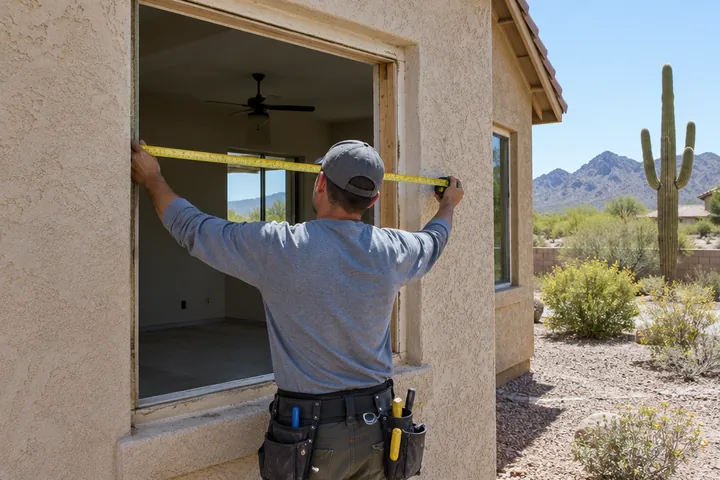
We measure every window, check the frames and talk through styles and glass.
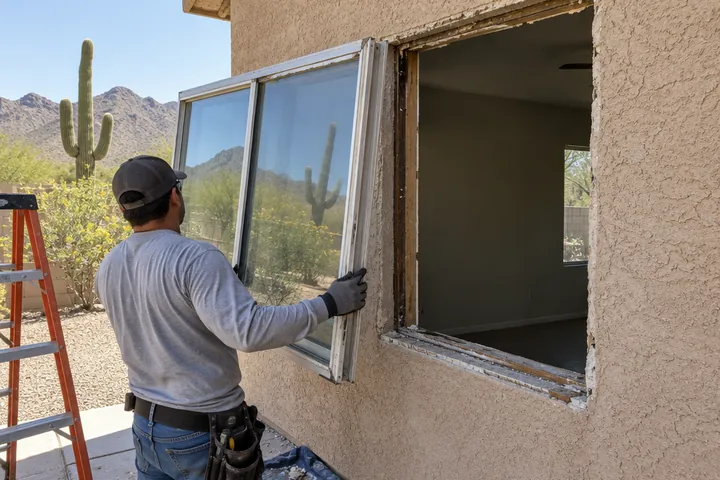
Old units come out carefully, with lead-safe practices on homes built before 1978.
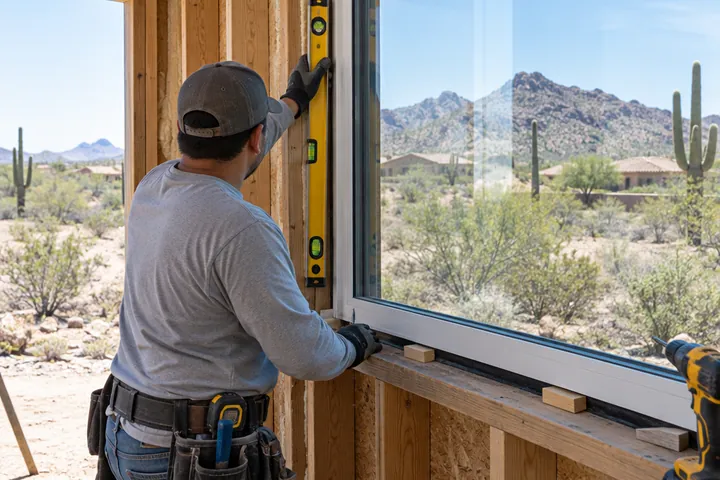
New windows are set level, shimmed, fastened and sealed against air, dust and water.
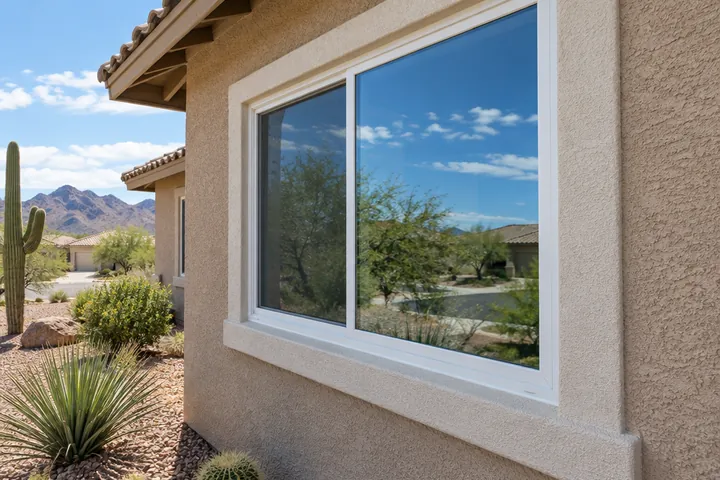
Trim and caulk are finished, the glass is cleaned and the old windows are hauled away.
Dual-pane windows with Low-E glass and a low solar heat gain coefficient. Vinyl and fiberglass frames both handle Phoenix heat well.
Many homes are done in one or two days once the windows arrive. Larger homes and full-frame installs take longer.
City of Phoenix guidance says replacing a window in the same size opening on a single-family home generally doesn't need a permit if conditions such as a solar heat gain coefficient of 0.25 or lower are met. Enlarging an opening needs a permit and inspection.
Usually, yes. Frame color, grid patterns and window styles can be chosen to keep the look of your home.